Jennifer Palisse
Taking maths off the beaten track
I'm a maths educator based in Melbourne. I love creating maths activities that drive curiosity and a bit unexpected. The kind that get students thinking like real mathematicians. I also run professional learning for teachers and develop curriculum resources.
About me
mathematics educator
I'm a maths educator based in Melbourne, Australia, currently leading the maths team at reSolve. I completed my PhD investigating comparative judgement as a pedagogical tool, alongside a long-standing interest in design thinking and philosophical inquiry in the classroom.
What I believe
I love taking the road less travelled when it comes to teaching maths. Give me a dry textbook exercise and I'll find a way to turn it into a messy, hands-on investigation instead. My favourite tools for this are arts & crafts, magic tricks, and puzzles. Anything that gets a "wait, how does that work?" out of a room. My approach is built on using problems with a low floor and high ceiling that allow learners to explore whatever direction interests them.

Professional Learning
My professional learning sessions let teachers experience the tasks firsthand, the same puzzles, games, and investigations their students would tackle, then we unpack how to actually pull them off in a real classroom.
Mathematics education
I design and deliver PD on using rich, off-the-beaten-track tasks in the classroom, the same kind of low floor, high ceiling problems I love building for students. Expect plenty of divergent thinking and a few tasks that surprise you.See the kind of tasks I mean:
- Crazy cubes: Positioning incorrect answers as valuable
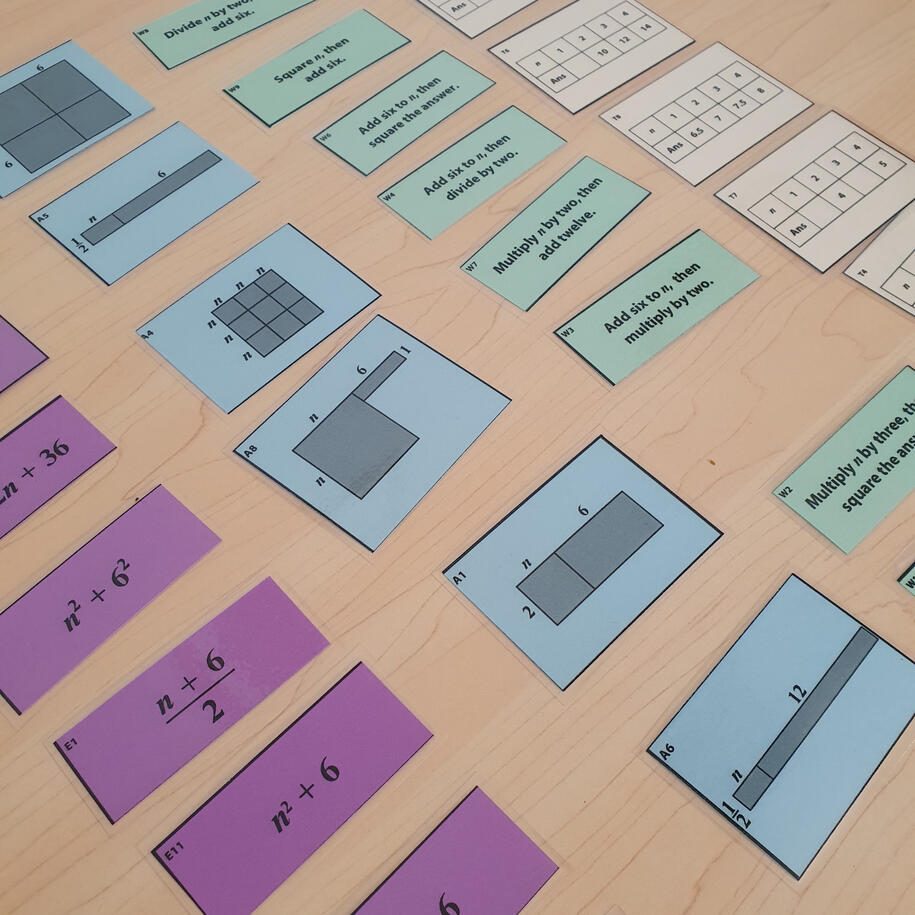
- Long division can make sense!
- You don't make friends with salad
Design thinking
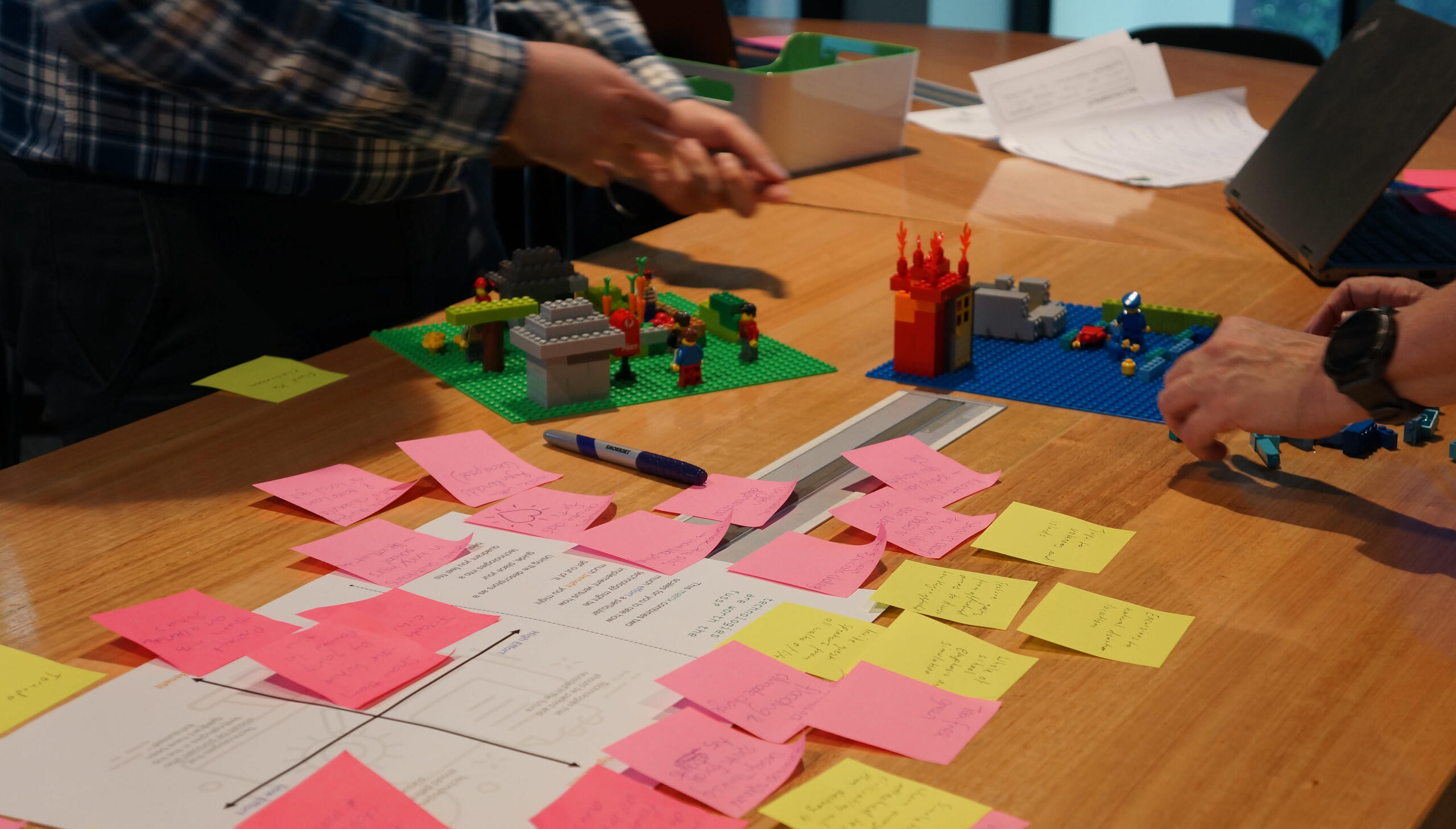
I also run PD on design thinking, a user-centred approach to problem solving built around empathy, creativity, and testing ideas before jumping to a solution. It works as a pedagogical framework for collaborative classroom learning, and just as well as a general way of working, useful for designing activities or approaching any problem that needs fresh thinking.See how I've put this into practice:
PD is delivered through reSolve. Get in touch to find out more.
Activities
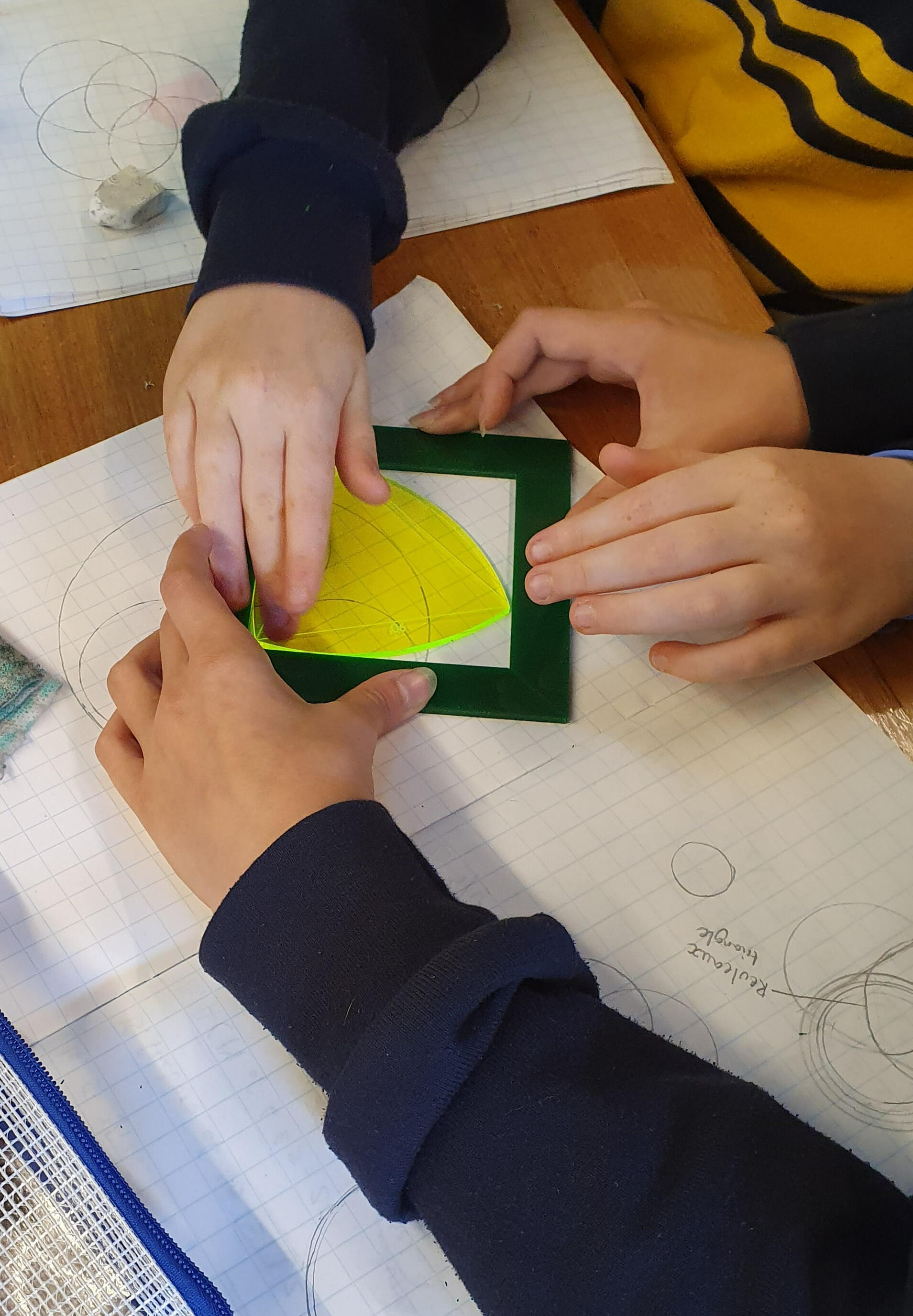
I love designing hands-on maths tasks with mulitple pathways in, the kind that need a bit of perseverance and a lot of sharing of ideas. They take all sorts of forms: puzzles, art, games, the occasional magic trick. Sharing ideas, testing conjectures, and explaining reasoning to each other is all part of the process.
These can be booked as student workshops through reSolve.
Below are some examples of my favourite activities I like to run.
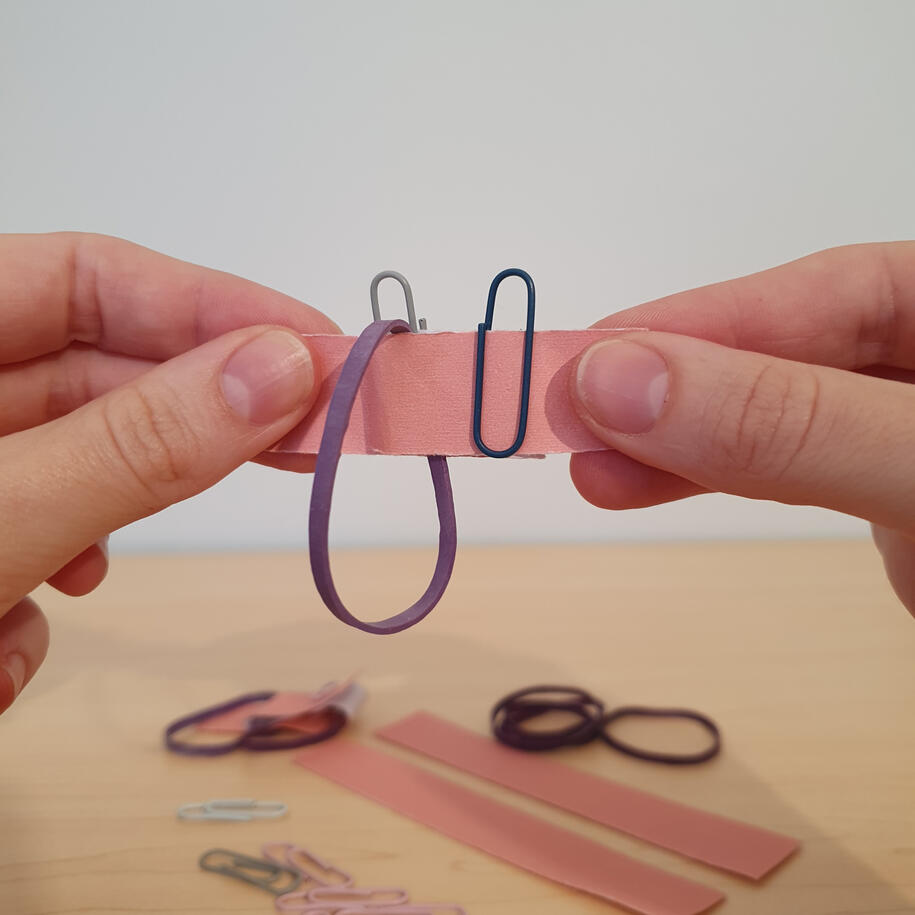
Stationery maths
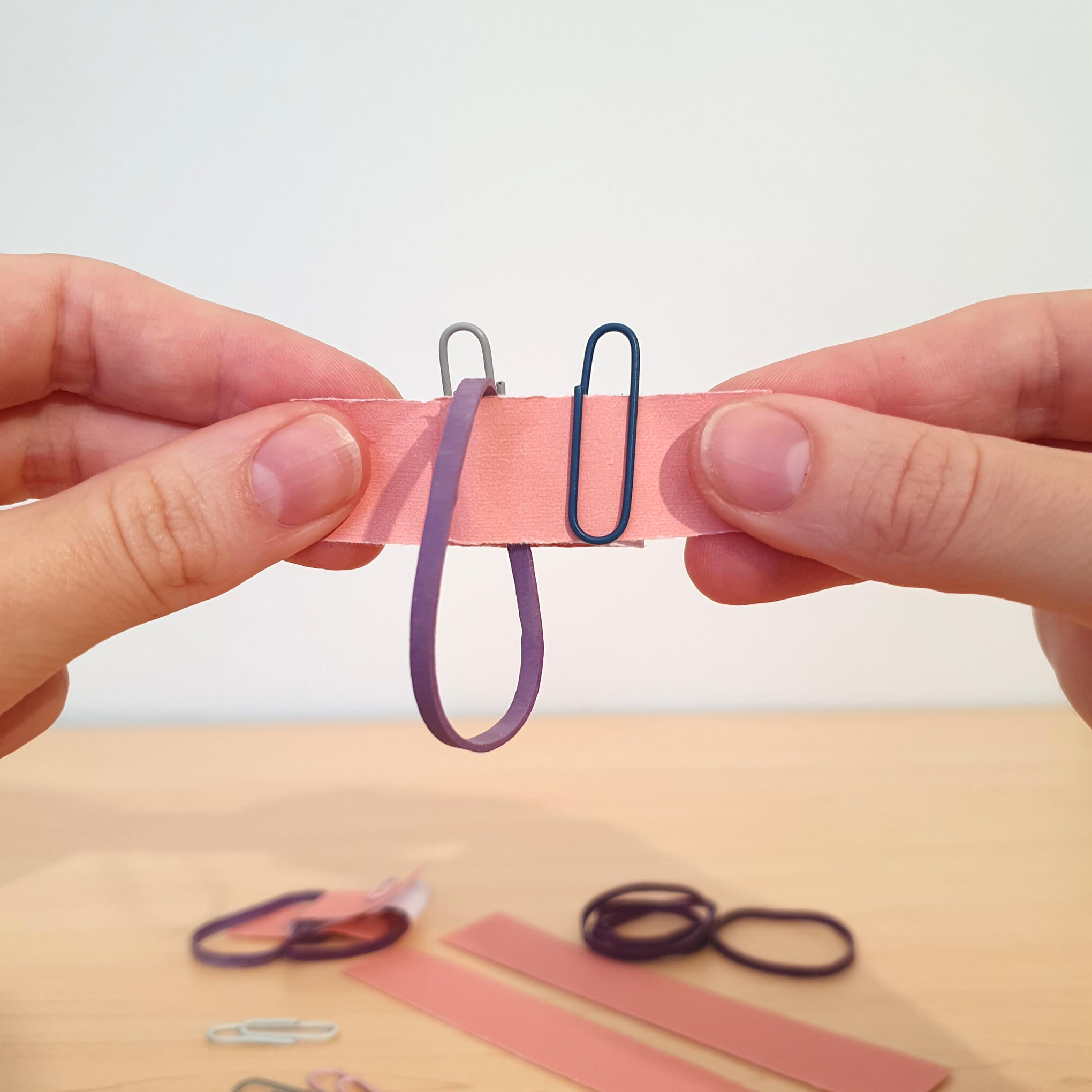
Make paper clips and rubber bands do some strange things on strips of paper and perform scientific experiments to work out what one paper clip + one paper clip equals.
The lazy Susan roller coaster
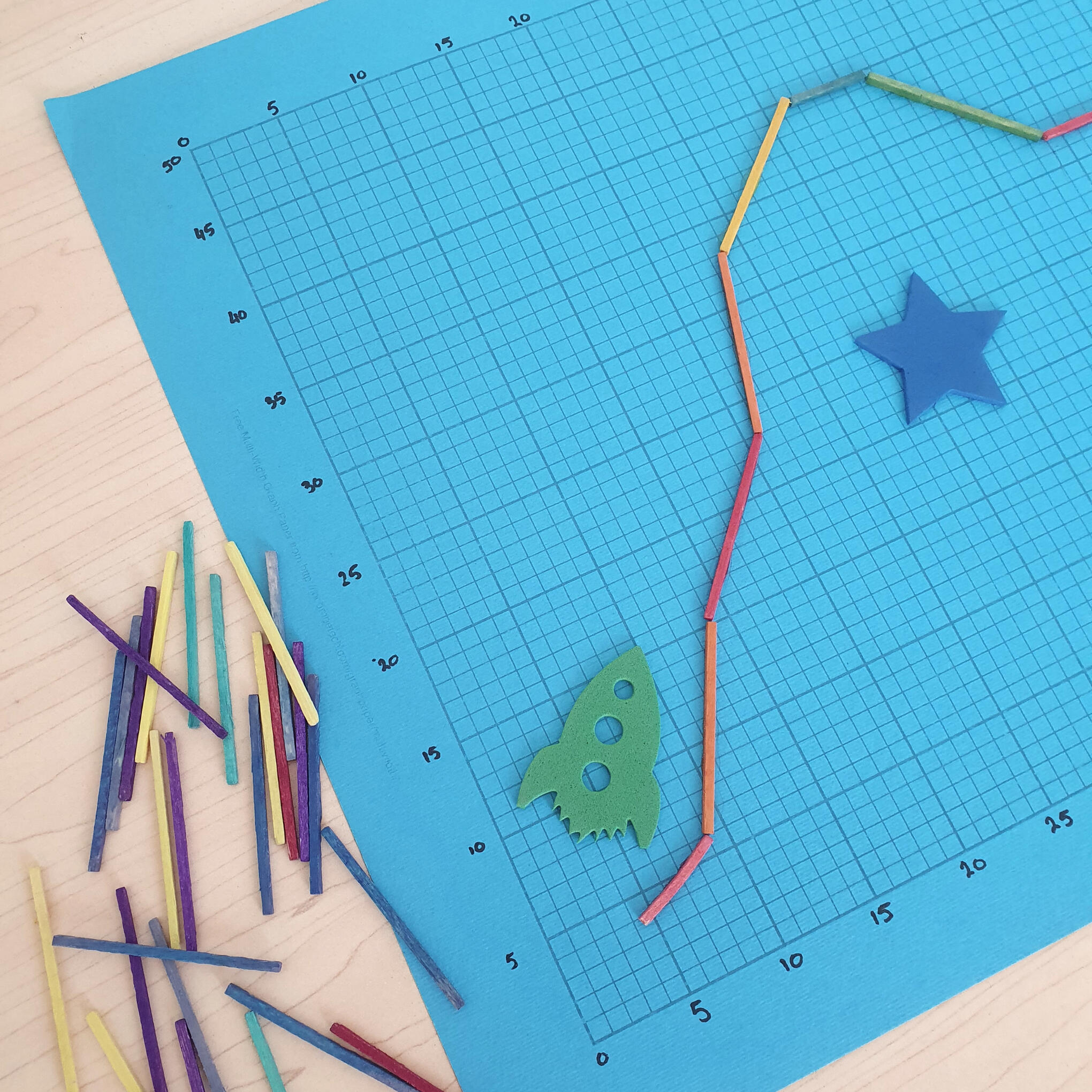
Use matchsticks to design a roller coaster from which we can create a graph of its derivative. Does the rollercoaster meet both safety and excitement requirements? An introduction to gradients.
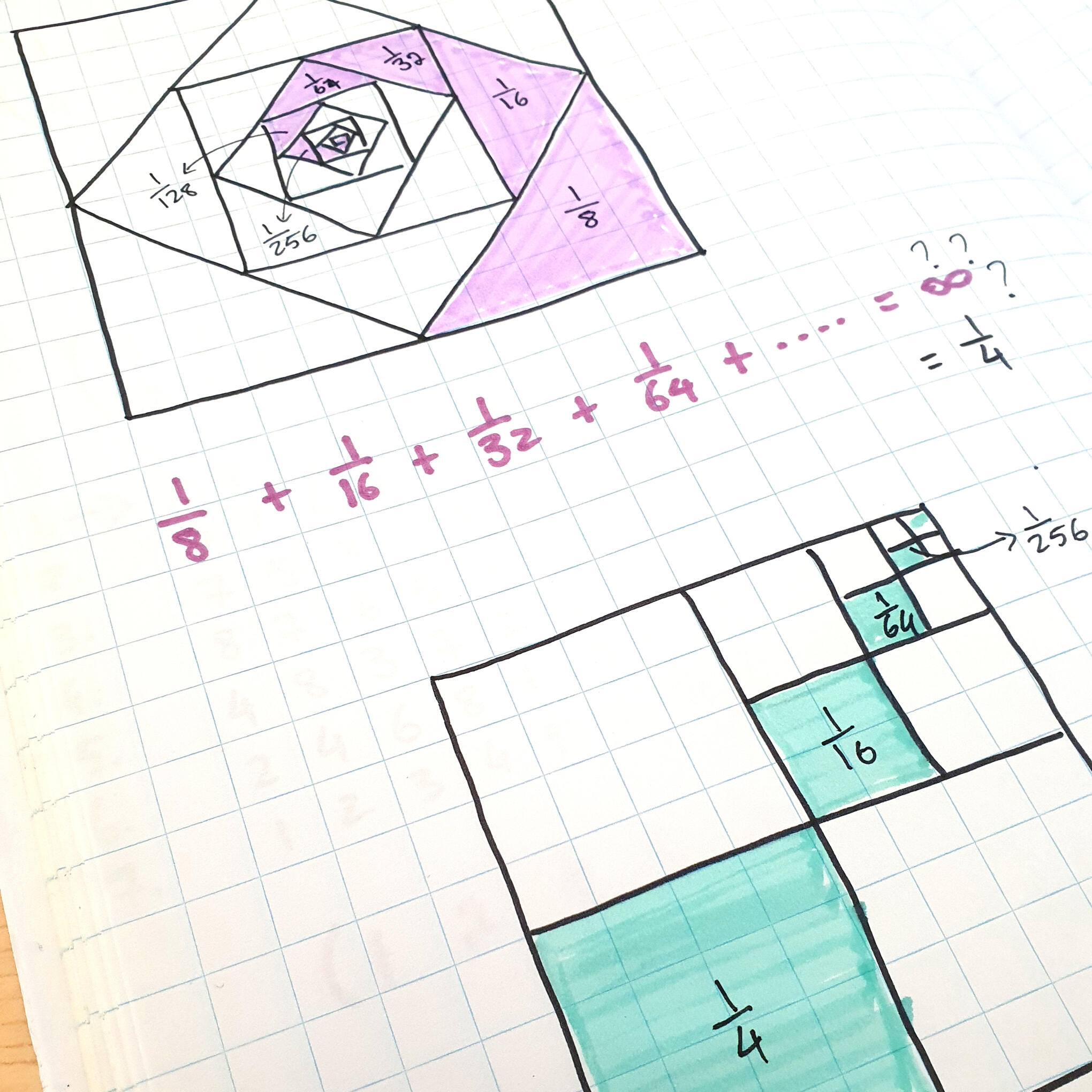
Dizzying squares
Doodling a set of infinite squares as a way of understanding how the sum of an infinite set of numbers doesn't always add to the same value
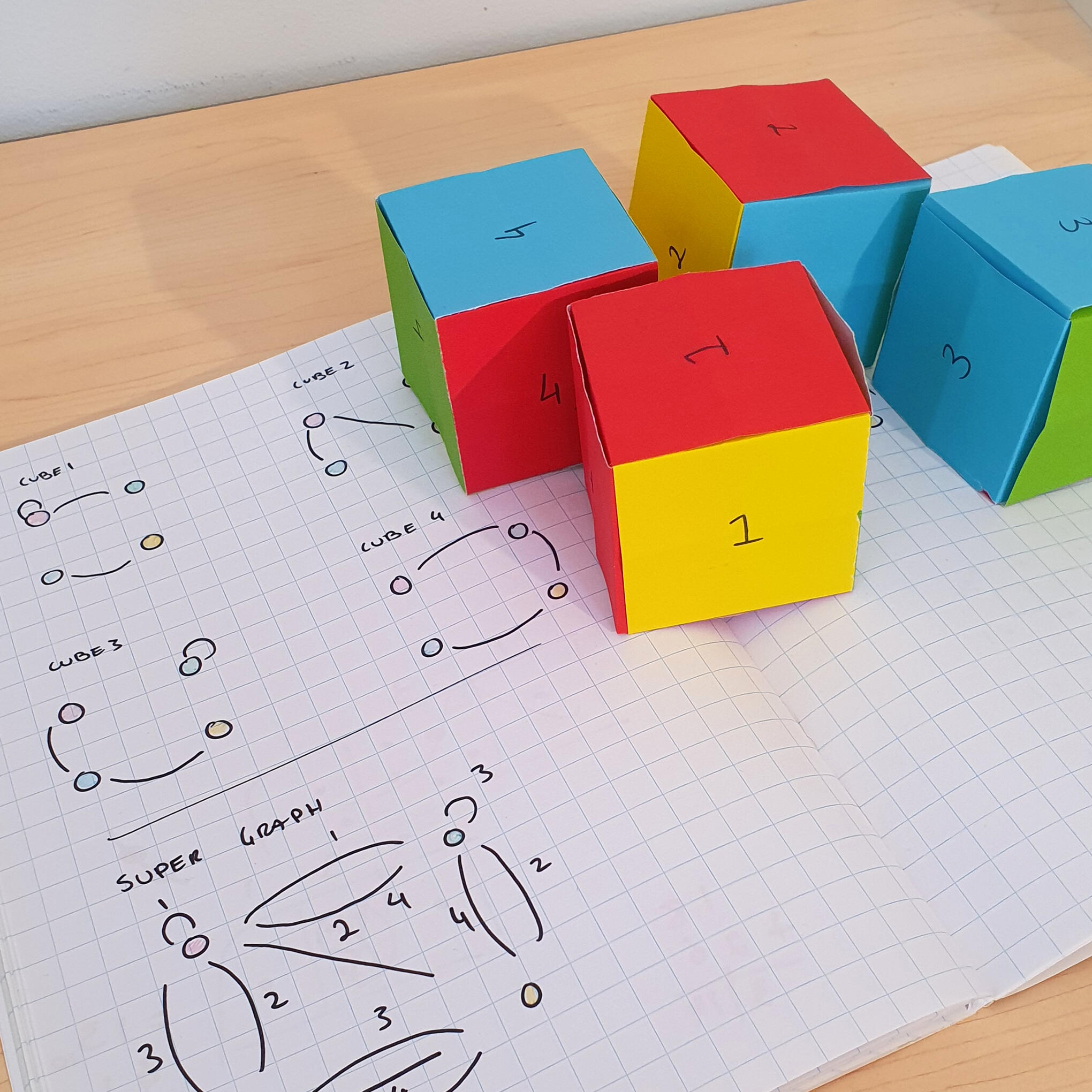
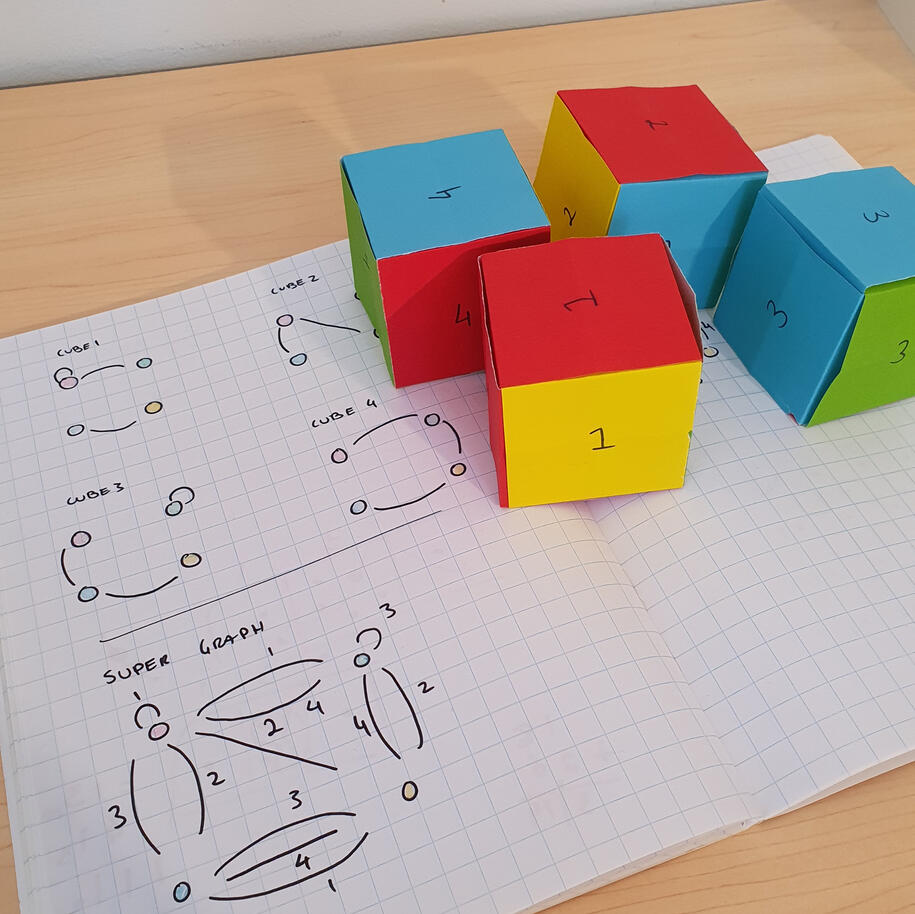
Crazy cubes
Solve a deceptively tricky puzzle where you need to arrange four cubes in a row, with one of each colour showing, using network graphs as a problem solving tool.
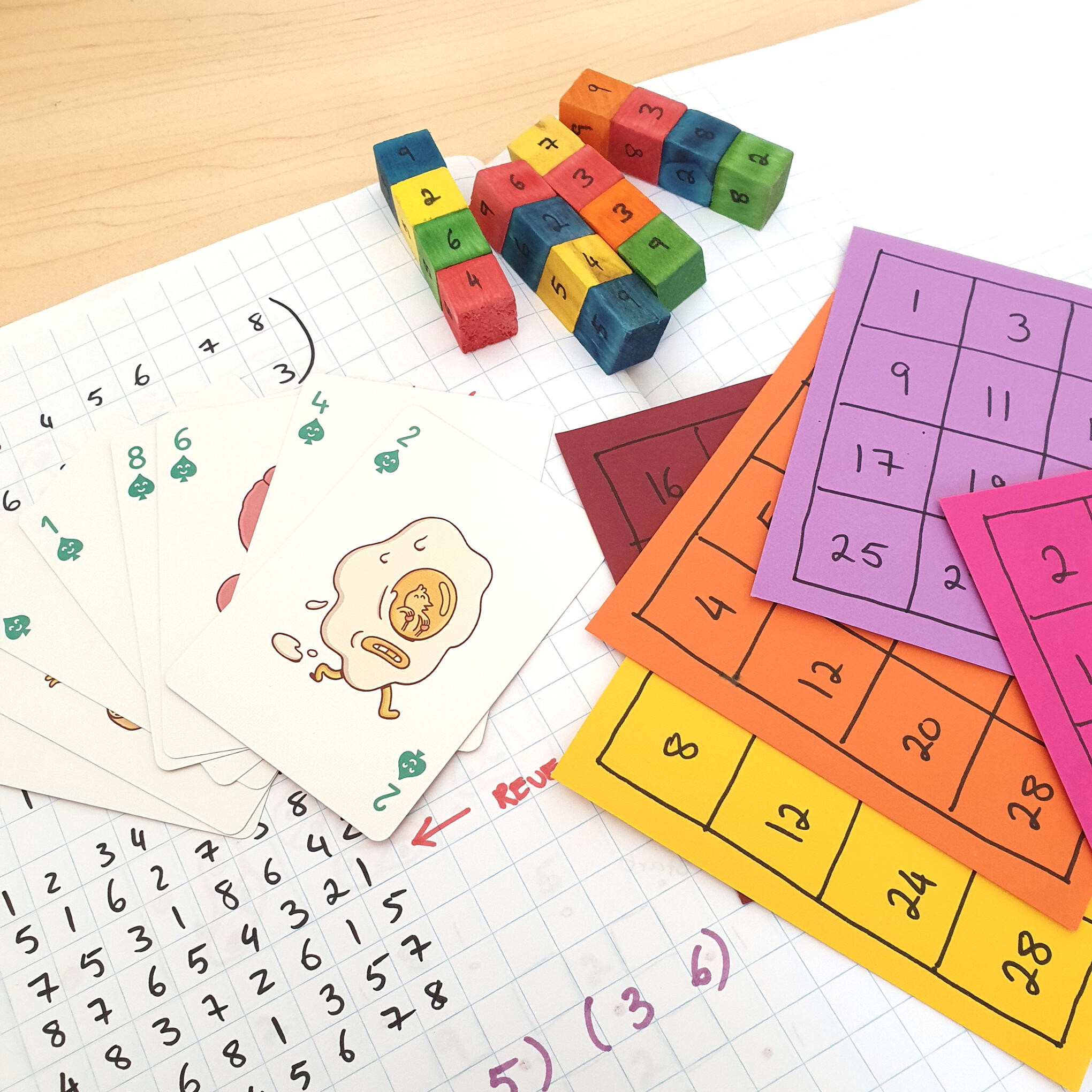
Magic tricks
There are all sorts of amazing magic tricks out there with fascinating mathematics such as binary numbers, permutations, and logical reasoning.
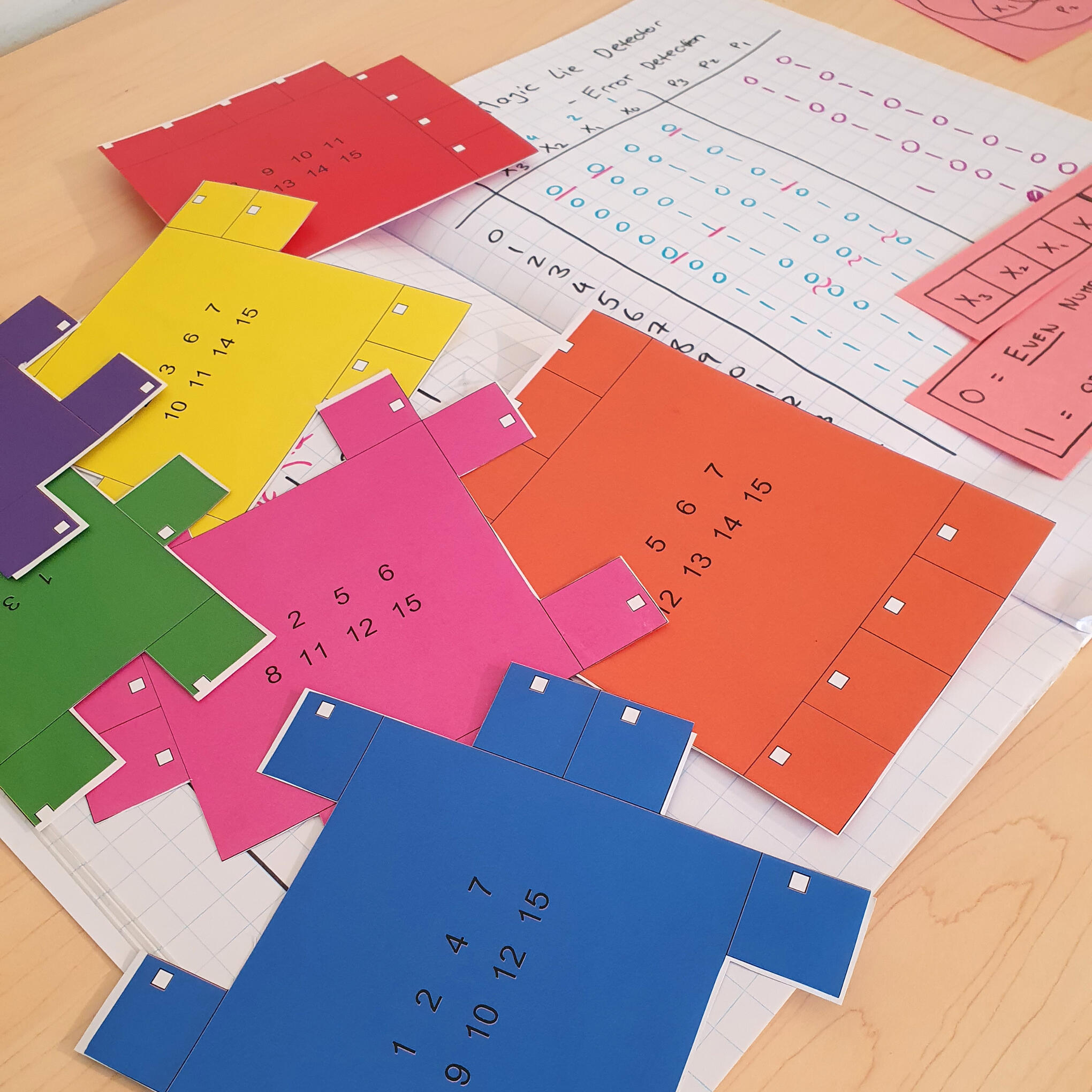
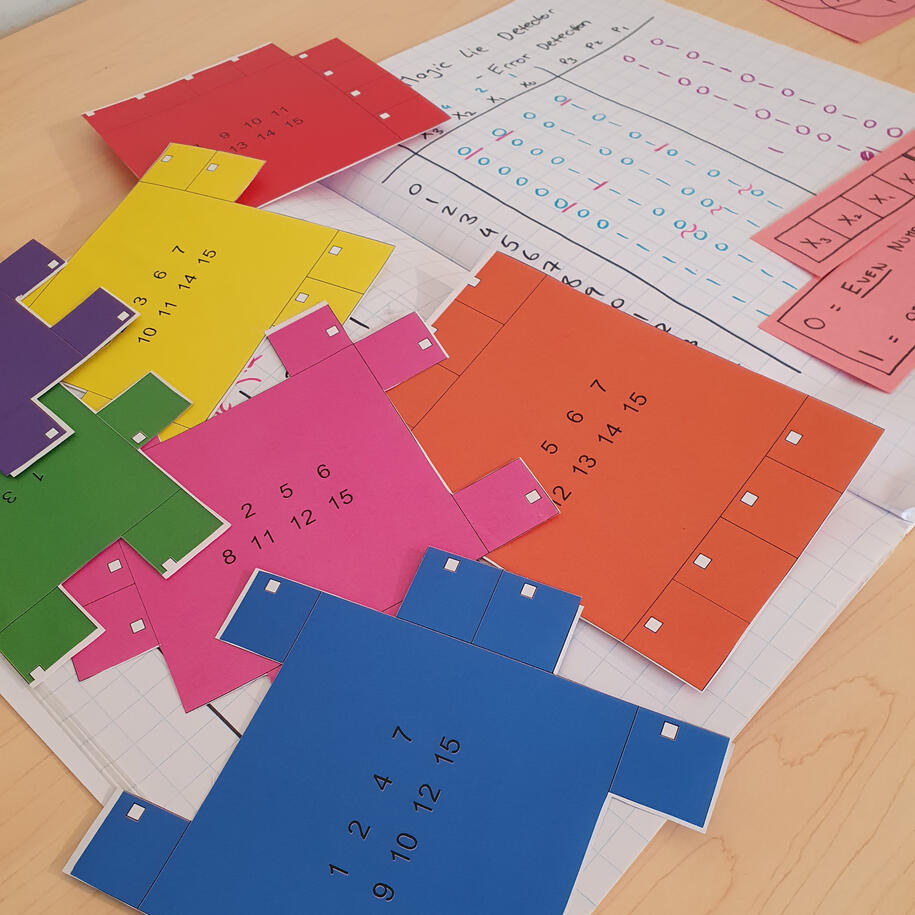
Catch the liar
Learn about error detection and the Hamming code in this computer science unplugged activity, then use it to perform a magic trick that catches people out in lies.
Research
My PhD looked at comparative judgement, a way of assessing student work where, instead of marking each piece on its own, you show two pieces side by side and ask: which one's better?
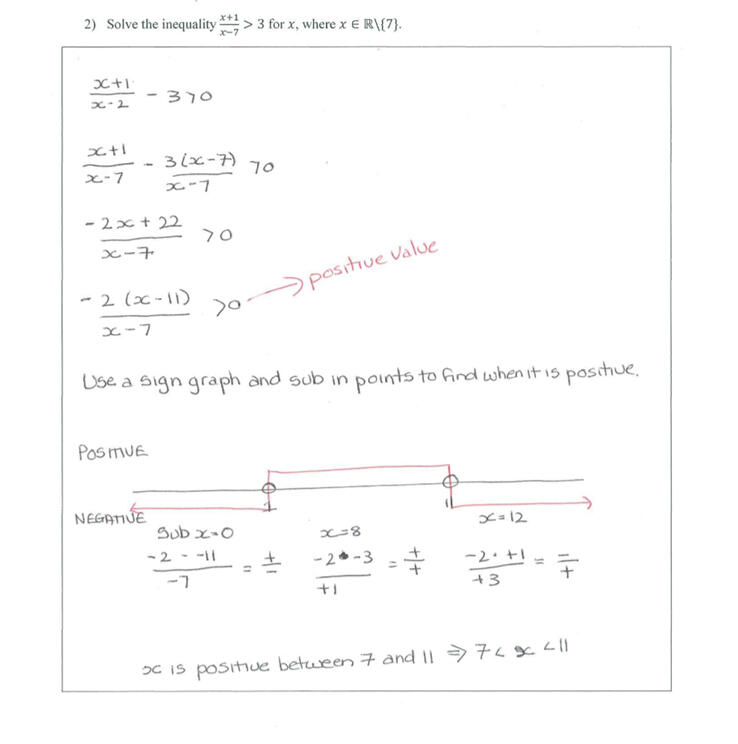
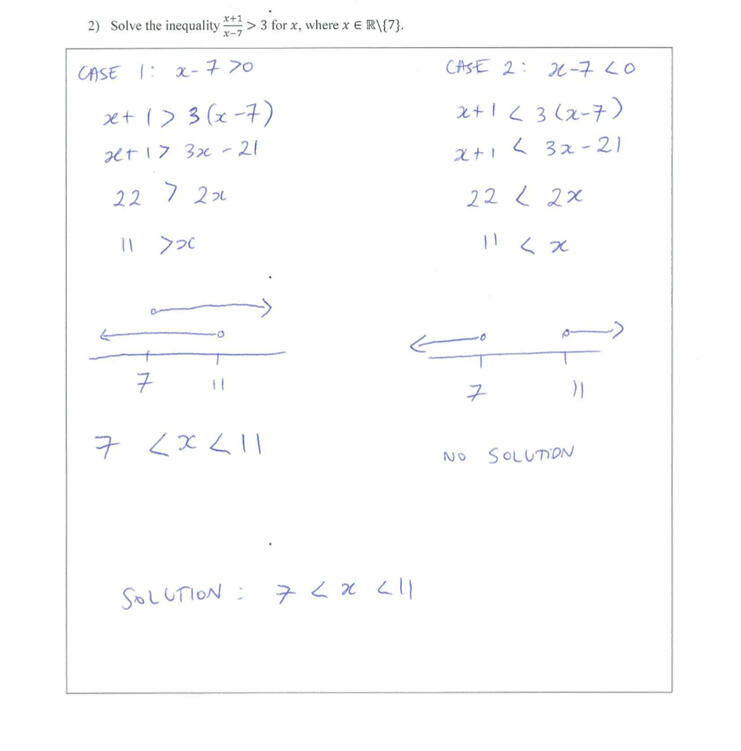
Have a look at the two solutions above. Which do you think is better, and why? That question, repeated many times across many pairs of work, is the basis of comparative judgement. Do it enough times and a ranking emerges, one that tends to line up closely with what traditional marking would produce.It's a method that's shown real promise in subjects like Design & Technology, but its use in maths had barely been explored, so that's where I focused my research.Across three studies, I looked at what happens in students' heads during this process, and whether it helps them learn, not just get ranked. The short answer: it's complicated, and probably depends on context. But a few interesting differences emerged between the two approaches. Comparing two solutions side by side seems to ease the mental load of judging, since there's a second solution to map against rather than an internal standard to hold in your head, and it seems to help students notice structural patterns and let go of habits they'd otherwise keep repeating in their own work. Evaluating one solution at a time asks more of students: they have to judge against their own sense of what "good" looks like, without another solution to lean on. That's harder, but it also seems to sharpen their focus on accuracy, and may be the better approach for building procedural knowledge specifically.
What's still open
Plenty. How comparative judgement plays out for younger students, or for those brand new to the process, is still largely unstudied. So is the right amount of scaffolding, does giving students the correct answer upfront help their confidence, or get in the way? There's also a deeper question underneath all of it: does comparative judgement actually change what students understand, or mostly change how clearly they communicate it?
Publications
Exploring the role of internalised standards in comparative judgement in mathematics. Proceedings of the 48th Conference of the International Group for the Psychology of Mathematics Education (2025).
Comparative judgement and its impact on the quality of students' written work in mathematics. Fifth Conference of the International Network for Didactic Research in University Mathematics, Barcelona (2024).
Does comparative judgement reduce students' perceived cognitive load when evaluating mathematics solutions? ACSME 2023 Proceedings (2023).
Comparative judgement and affect: A case study. MERGA 43rd Annual Conference Proceedings (2021).
Comparative judgement and the hierarchy of students' choice criteria. International Journal of Mathematical Education in Science and Technology (2021).
"I failed to remember what I should have learnt." Resolution of misconceptions during comparative judgement. PME-NA 43rd Annual Meeting Proceedings (2021).
Making the grade: Do mathematics marks matter to women in STEM? 12th Delta Conference Proceedings (2019).
PhD Thesis
Writing
Over the years I've written a handful of articles for maths teachers, sharing things I've tried that worked.
Crazy cubes: Positioning incorrect answers as valuable. Australian Mathematics Education Journal, 4(2), 22–27 (2022).
Maths and design thinking. The Common Denominator, 9–11 (2022).
The Simpsons in the mathematics classroom. Vinculum, 52(1), 16–17 (2015).
Snippet: Visual Proofs: Ball Chains and the Area of a Circle. Vinculum, 50(2), 9 (2013).
You Don't Make Friends with Salad. Vinculum, 50(4), 4–6 (2013).
e-Snippet: Infinity Elephants. Vinculum, 49(1), 4–5 (2012).
Long division can make sense! Vinculum, 49(3), 6 (2012).
How Well Do Our Students Understand the Derivative? Vinculum, 47(3), 4–9 (2010).
Talks
Chances are, if we've met at a conference, it was at one of these.
KEYNOTE: The hardest thing to teach is a good question, Mathematics Association of Western Australia Annual Conference (2026)
Implementing a school(s) wide approach to design thinking using a Community of Practice model, It Takes a Spark! Conference (2024)
Design thinking in the mathematics classroom, QUATUM Victoria STEM Conference (2023)
Patterns in art as mathematics enrichment, MAV Annual Conference (2022)
KEYNOTE: Mathematics by Design, MAV Annual Conference (2021)
Is this your card?, Science Week Mathematics & Statistics evening, The University of Melbourne (2020)
KEYNOTE: Scratch and Edgy: Teaching algorithmic thinking in the middle years and VCE, MAV Annual Conference (2014)
KEYNOTE: Creative approaches to skills and drills, MAV Annual Conference (2013)
Maths meets art – projects kids will want to put on their fridge, MAV Annual Conference (2012)
Keen to have me speak at your event or seminar? Get in touch.
Contact
Let's chat. Let me know if you are interested in any teacher professional development, teacher mentoring, student workshops, or even just to chat about maths education research.